
There is a particular conversation I have heard repeated in a dozen different ways over the last two years. Someone in Lucknow, or Kanpur, or Varanasi has saved up. They have a shop space, or an uncle with a shop space, or a spare corner in a family building near a college. They know food sells. And they ask the same question: is a Burger Franchise in India actually worth it, or is it just a nice-sounding way to lose ten lakh rupees?
It is a fair question. So let us answer it properly — with numbers, with honesty about the risks, and with a clear look at why the north Indian Tier-2 market is where this category is quietly getting interesting.
The market is real, and it is not concentrated in Delhi anymore
India’s organised food franchise sector is growing at roughly 18% CAGR heading into 2026. That figure gets quoted a lot, but the part people skip over is where the growth is coming from.
For most of the last decade, QSR expansion meant metros. Mall food courts in Gurugram. High streets in Bandra. That phase is largely saturated — rents there now eat the margin before the first burger is sold.
The current wave is different. Affordable quick-service brands are expanding fastest into Tier-2 and Tier-3 cities, and the reason is simple arithmetic:
- Rent in a good Gomti Nagar or Hazratganj location is a fraction of what the same footfall costs in a metro.
- Staff costs are meaningfully lower, and attrition is lower too.
- Competition is thinner. A city like Lucknow has plenty of burger outlets, but very few branded, systemised ones.
- The customer has changed. Incomes have risen, Instagram has flattened taste across cities, and a 22-year-old in Lucknow wants exactly what a 22-year-old in Mumbai wants.
That last point matters more than the others. The old assumption that Tier-2 customers only want cheap food is outdated. They want something worth photographing, and they will pay for it.
What a burger franchise in India actually costs
Here is where most articles get vague. Let us be specific instead, because the spread in this category is enormous.
| Tier | Typical entry | Who it suits |
| Global brands (McDonald’s, Burger King) | ₹6 crore and up | Institutional investors, not first-timers |
| Premium Indian QSR chains | ₹35–65 lakh | Established restaurateurs adding a second format |
| Mid-market Indian burger brands | ₹10–25 lakh | Serious first-time owners with backing |
| Compact kiosk formats | ₹3–10 lakh | First-time entrepreneurs, small-footprint locations |
The franchise fee is only one line item. Your real outlay includes interiors, kitchen equipment, initial inventory, deposits, licences and — the one everyone forgets – working capital for the first three to four months. Budget for the outlet to not break even immediately. If a brand tells you it will, be suspicious.
The problem with most burger franchise offers
Walk through the listicles and you will notice something. Nearly every brand pitches the same three things: low investment, high demand, full support.
Fine. But none of that is a differentiator, because everyone says it. And it dodges the question your customer will actually ask, which is not “how much did you invest?” It is “why should I eat here instead of the place next door?”
A burger is one of the most commoditised food products on earth. If your outlet sells a round bun with a patty in it, you are competing purely on price and location — and there will always be someone cheaper and someone better located.
The brands that survive in this category are the ones with a product people cannot get elsewhere. That is the entire game.
Where SUFO fits
SUFO is India’s first UFO burger franchise, and the concept is exactly what it sounds like. Instead of a stacked, open burger that falls apart in your hands, SUFO serves a sealed, saucer-shaped burger – fillings, sauces and melted cheese locked inside a crisp edge-sealed shell.
Two things happen as a result.
First, it is genuinely mess-free. No slipping patty, no sauce down the sleeve. That sounds trivial until you realise it makes the product viable for takeaway, delivery, college canteens, cinema foyers and food courts in a way a conventional burger is not.
Second, people photograph it. Nobody posts a photo of a normal burger. They post a photo of something that made them ask “wait, what is that?” In a market where the marketing budget of a single outlet is small, product-driven word of mouth is worth more than advertising.
The brand is built and run by UFO Foods Pvt. Ltd. from Gomti Nagar, Lucknow — which means north Indian franchise partners are dealing with a head office in their own time zone, their own state, and their own supply geography. That is not a small advantage when you have an equipment problem at 9pm on a Saturday.
The three SUFO franchise formats
SUFO does not force one model on every partner. There are three, sized for genuinely different budgets:
1. SUFO Burger Kiosk — ₹3 Lakh + GST
Space: 150–200 sq ft
The entry point. Designed for malls, food courts, high streets, campus locations and transit hubs. Small footprint, fast throughput, minimal staff. This is the format for a first-time owner who wants to learn the business without betting the house on it.
2. SUFO Café — ₹5 Lakh + GST
Space: 900–1,200 sq ft
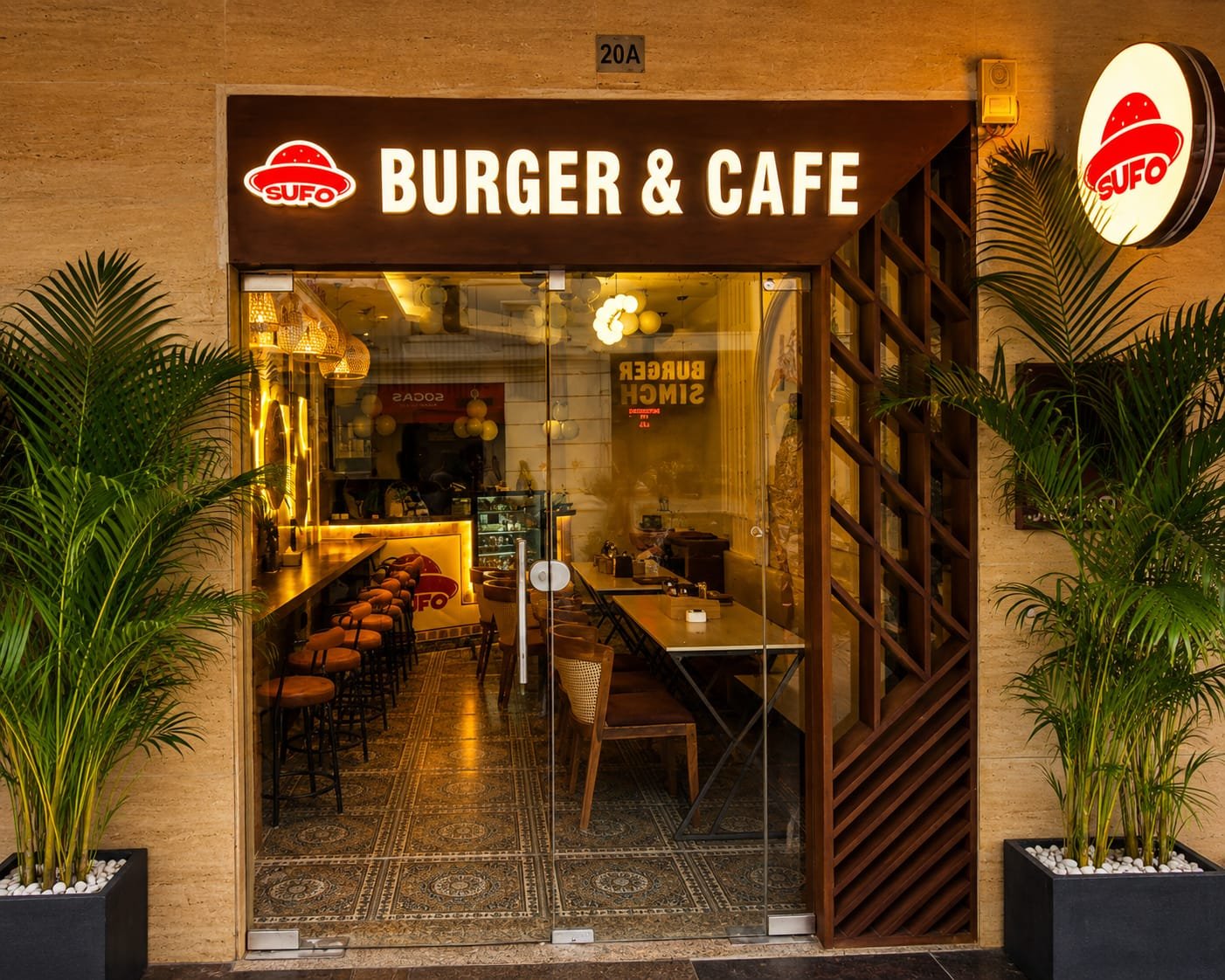
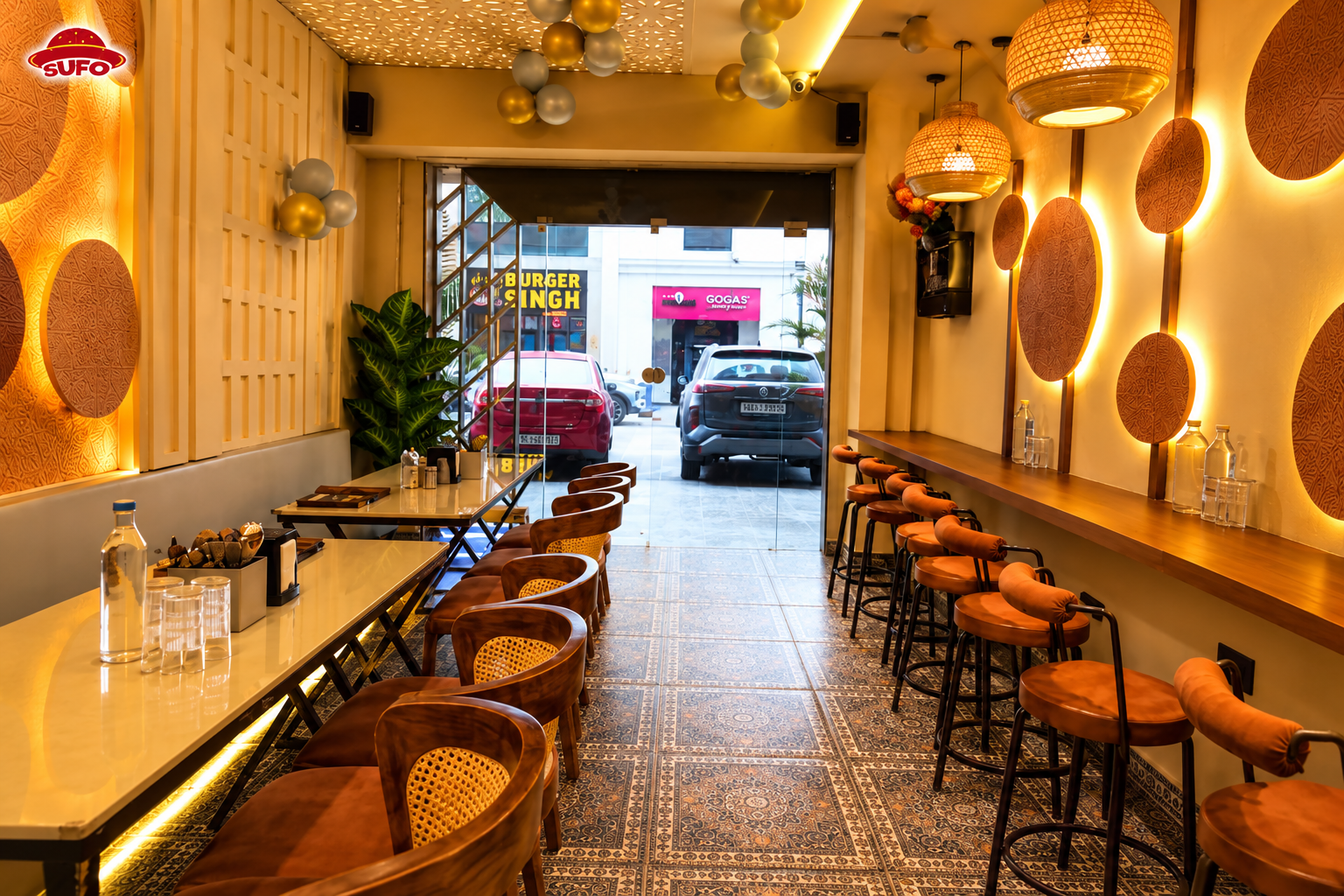
A full café experience with seating, an extended menu and longer dwell time. Suits high-street locations with evening and weekend footfall — the sort of place a group of friends settles into for an hour rather than grabbing and going.
3. Romeraa by SUFO — ₹25 Lakh + GST
Space: approximately 2,600 sq ft
The premium fine-dine format, built for prime city locations and an elevated dining experience. This is for experienced operators who want scale and a flagship presence.
Additional setup and operational investment applies on top of the franchise fee in every format, and will vary with your location, interiors and equipment choices.
What you actually get for the fee
A franchise fee should buy you a shortcut past the mistakes. With SUFO, partners get:
- Store setup guidance — location assessment, layout and outlet design
- Branding and interiors — signage, menus and the visual identity that makes the outlet recognisable
- Kitchen and equipment support — the cooking systems and operational setup the product needs
- Team training — hiring guidance and the operational training that keeps taste consistent across shifts
- Standardised food and quality systems — recipes, portioning, sourcing
- Technology and business solutions — billing, inventory, reporting
- Marketing support — launch campaigns and local-area marketing
- Ongoing franchise assistance — not just a handover and goodbye
Is it right for you? An honest checklist
A burger franchise in India works well if:
- You can commit daily presence, at least in the first year. Absentee food outlets fail. All of them.
- You have working capital beyond the setup cost.
- You have — or can find — a location with genuine footfall, not just cheap rent.
- You are comfortable following a system rather than improvising your own menu.
It is the wrong choice if you are looking for passive income, or if you expect to recover your investment in six months. Food is an operations business. The brand gives you a head start; the hustle is still yours.
Getting started
SUFO is currently expanding across Uttar Pradesh and into new territories nationally, with franchise availability depending on territory, location potential and market fit.
If you are weighing a burger franchise in India and you want a concept that is not another version of what already exists on your street, it is worth a conversation.
Enquire: sufo.in/franchisee Email: hello@sufo.in Head office: 42, Maple Avenue, Riverside Plaza, Gomti Nagar, Lucknow, Uttar Pradesh – 226010
Frequently asked questions
What is the minimum investment for a SUFO burger franchise?
The SUFO Burger Kiosk has a franchise fee of ₹3 Lakh + GST for a 150–200 sq ft space. Additional setup and operational costs apply depending on your location and requirements.
Which is the best burger franchise in India for a first-time owner?
Look for a compact format, a differentiated product and genuine operational support. Low-footprint kiosk models let you learn the business with limited downside before scaling.
Can I open a SUFO franchise in Lucknow or another UP city?
SUFO welcomes enquiries across Uttar Pradesh and India. Availability depends on territory, location potential and the brand’s expansion plans.
How profitable is a burger franchise in India?
Returns depend on location, footfall, rent, operating discipline and format. No brand can responsibly guarantee a figure — ask any that does to show you outlet-level data.
Does SUFO provide training and setup support?
Yes. Partners receive guidance on outlet design, branding, equipment, operations, staff training and launch marketing, with the scope depending on the selected format.

[…] Next […]